The $8,600 Decision: A Case Study
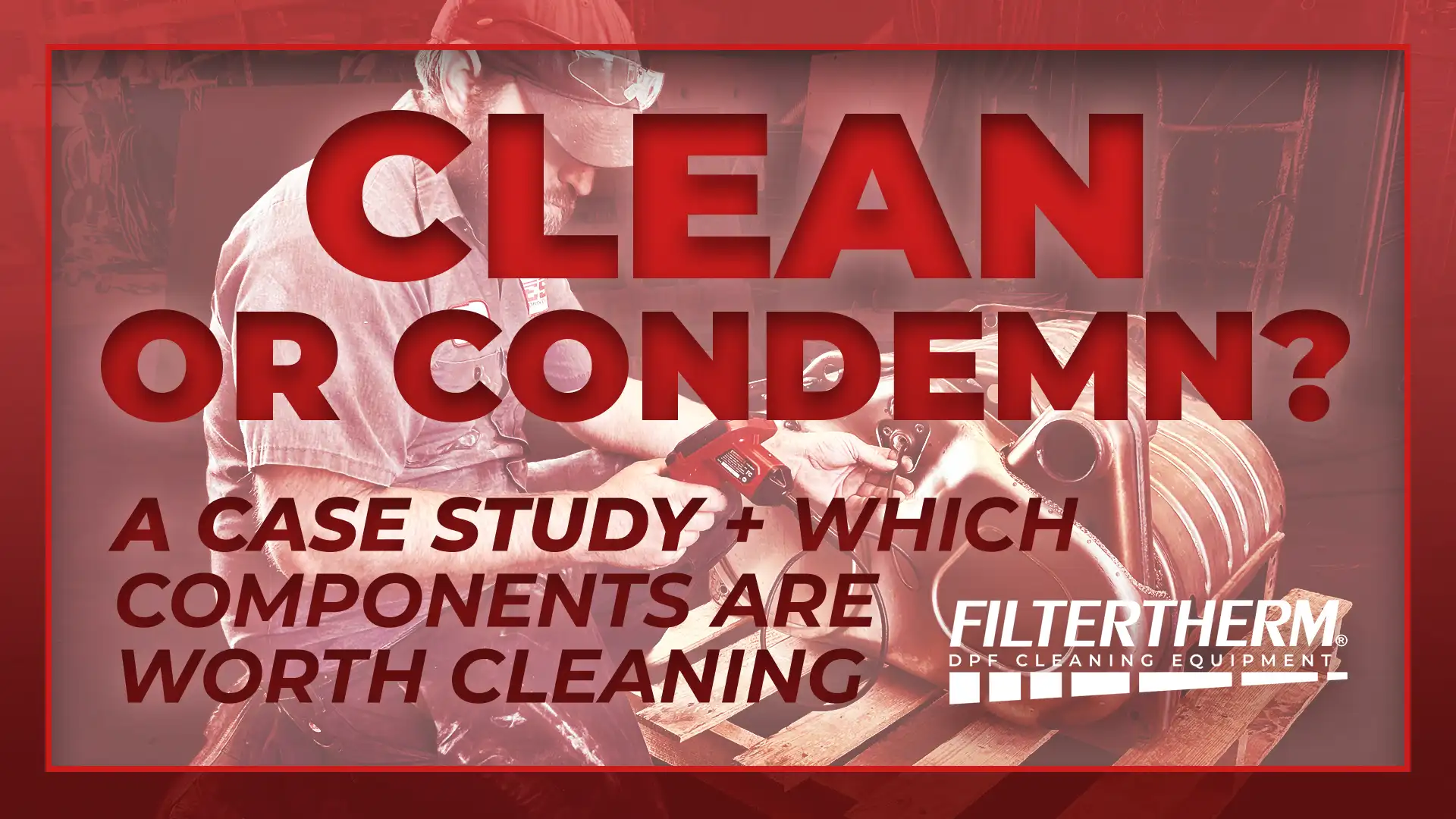
Picture an emissions unit pulled off a machine, packed solid with crystallized DEF. It looks hopeless, and a new one lists at over $8,600*. Most of us would order the replacement. A lumber company did.
By the time the original unit reached Diesel Emissions Service (DES) in Redding, CA, the new one was already bought. The DES crew baked the clogged CEM three times in a Filtertherm oven, and the DEF came out. The cleaning bill was about $600.
On the one hand, the customer now has a spare unit. On the other hand, they now know they didn’t need to spend the extra $8,000.
The costly step in this story was a question nobody asked: can it be cleaned? Here’s how to answer that for your own fleet, including which emissions components are worth cleaning in-house and which belong in the recycle bin.
*Dealer list price for the Cat® Clean Emissions Module at the time of publication. Prices vary by dealer and platform.
What Came in and What the Borescope Showed
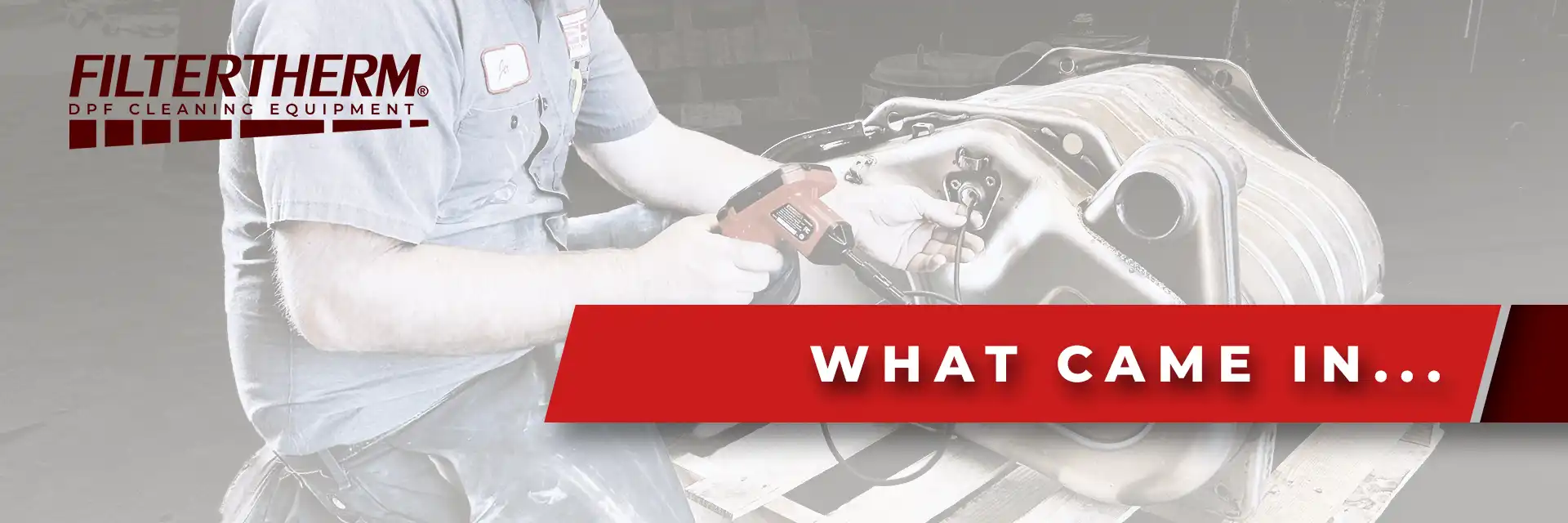
The unit was a Cat® CEM (Clean Emissions Module), an all-in-one housing that combines the aftertreatment stages in one enclosed assembly. A welded-together unit like this one can’t be easily opened, so the main inspection tool is a borescope. The camera showed thick, heavy crystallized DEF built up inside the unit. A dosing fault was the likely cause, though the exact failure on this unit wasn’t confirmed.
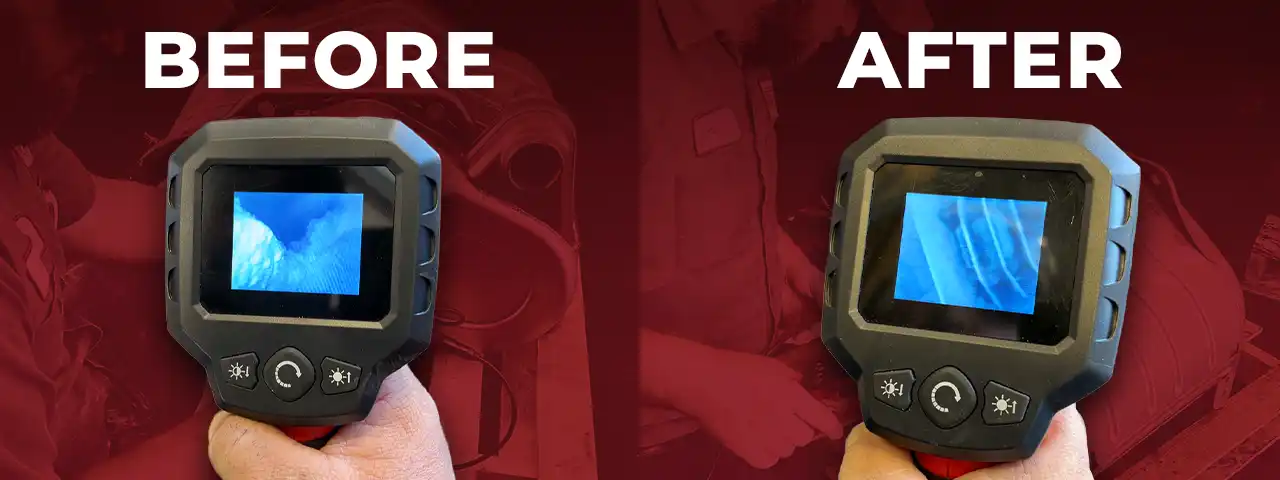
The crew baked the unit in a Filtertherm thermal oven. Heavy deposits or soot loads can take more than one cycle, and this one took three. Each bake runs overnight. After the third, the borescope showed the DEF deposits were cleared.
Why This Matters for On-Road Fleets
The Cat module is an off-road part, but the situation applies to any fleet with newer trucks. Nearly every modern diesel uses DEF, and many now pack the aftertreatment components into a single assembly similar to this Cat CEM.
The Detroit One Box found on many Freightliner trucks is one of the most common examples – while some parts are serviceable on these, others are not. When something inside fails, often the first answer from the dealer is to replace the whole assembly, and a Detroit One Box can run $12,000 or more. That should be the last resort.
A DEF or other upstream issue will also affect many other shapes and styles of diesel emissions system components, including DPFs, DOCs, and SCRs. Filtertherm Cleaning systems excel at cleaning these types of filters as well.
DEF issues causing crystallization are another reason cleaning is required. Our technicians point to several causes:
- A doser or injector malfunction.
- Outside air pulled in through a bad gasket.
- Loose bolts on the assembly.
- A pinhole or crack in a DEF hose.
Any of these can spray DEF where it shouldn’t be, and it crystallizes inside the unit, often making a hell of a mess.
FYI: Filtertherm thermal ovens are large enough to hold most One Box units or bake multiple standard DPFs at once. And we’ve got an even larger version in the works. Stay tuned…
While most filter cleaning services are due to normal soot buildup over time, the “replace-or-clean” question applies here too.
Clean or Condemn: A Decision Guide
Inspect first, then decide. An initial visual inspection for cracked or melted bricks is step one, plus performing a “pin-test” to spot-check cells for hard-pack sintering/soot buildup. Weigh and flow test every standard filter before and after each cleaning (use a borescope on welded units).
| What you find | What it looks like | Verdict |
|---|---|---|
| Soot and ash loading | High backpressure, and flow readings return to the green range after cleaning | Clean and return to service |
| Crystallized DEF deposits | Visible crystalline buildup or a unit that weighs far more than normal | Clean, possibly in several bakes. Fix the cause first. |
| Coolant contamination | Coolant traces in the unit from an engine leak | Clean only as a short-term stopgap. The DOC coating is likely poisoned, and cleaning can't repair it. |
| Cracked, melted, or damaged substrate | Visible cracks or broken sections. Sections melted from a thermal event. | Condemn. Don't clean or reinstall. |
| Hard-packed cells | Flow stays in the red range after multiple cleanings | Condemn |
The complete pre/post inspection protocol is detailed here > DPF Cleaning Guide: Inspection & Benchmarking.
For standard filters, the flow rate chart sorts readings into three bands: green for excellent, orange for okay but due for more frequent cleaning, and red for damaged or compromised. A filter that reads red after a proper cleaning should be replaced. Get the DPF Flow Chart PDF here.
Fix the Cause First
The lumber company’s unit came back clean. A second similar unit came in, from a different company. It had a different story. It was contaminated with coolant and soot. One thermal cleaning and a dry-out cycle got it working, but the coolant likely poisoned the catalyst coating in the DOC, and no amount of cleaning can restore that. The owner kept the cleaned unit as a stopgap and ended up ordering a replacement anyway.
Both cases teach the same lesson. Cleaning removes what’s inside the unit. It doesn’t remove whatever put it there. A leaking coolant path, upstream engine issues, or a faulty doser will foul a freshly cleaned unit again, so find and fix the source before you reinstall anything.
Replacement Cost vs. In-House Cleaning:
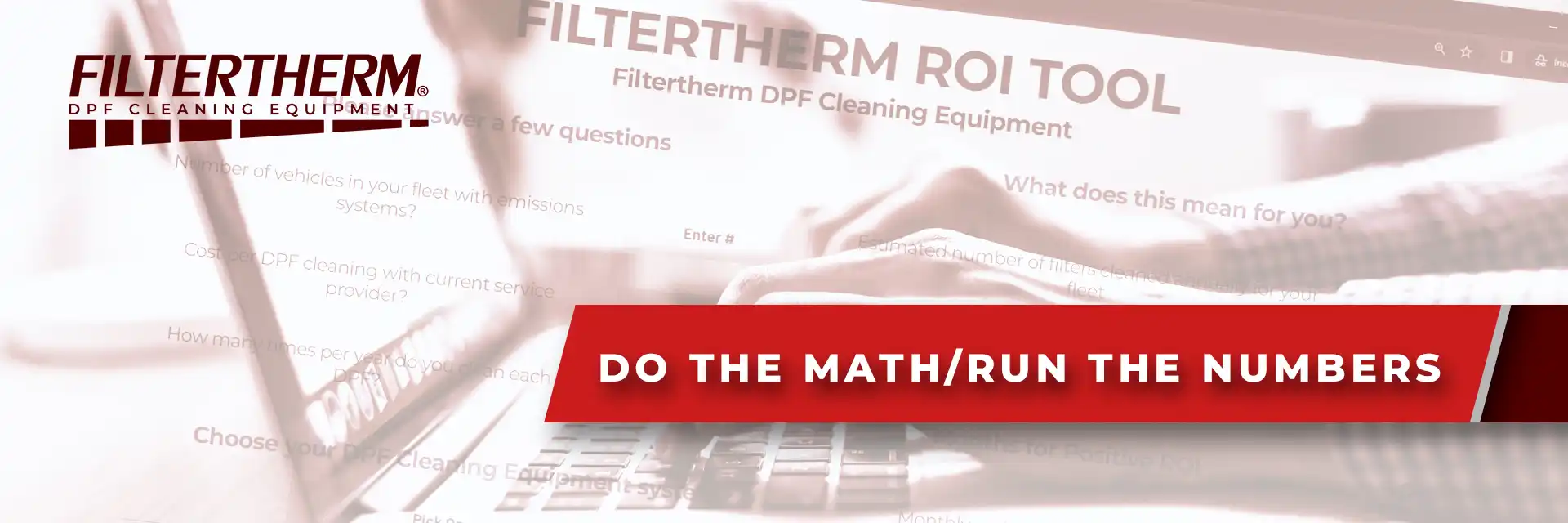
Doing the Math
The $600 in this case is what DES charged a customer for 3 cleanings, so it isn’t your in-house cost. Your replacement cost is time and labor. Each thermal bake runs overnight, and the hands-on work is loading the oven, unloading it, and inspecting the unit afterward. Labor varies by shop and by how many bakes a unit needs. This one needed three – which isn’t normal – most of the time one bake is all it takes.
Set that against the alternative. The replacement cost for this unit lists at over $8,600*, and the same trade-off applies to any assembly your fleet would otherwise replace. If a few overnight bakes and a technician’s time come in well under the price of a new part, cleaning in-house pays for itself on that unit alone. Filtertherm systems can make sense for fleets of all sizes, where enough components cycle through to keep the oven busy.
We built a custom Fleet ROI Tool so you can run some numbers based on your fleet’s DPF maintenance needs.
Tools to Run Your Own Numbers
- Filtertherm ROI Tool: a custom ROI calculator for fleets. Use it to compare in-house cleaning with your current costs.
- DPF Flow Rate Chart: a 14-page reference of baseline, operational, and compromised flow readings for filters from Caterpillar, Cummins, Detroit, Volvo, Mack, International, and other makes. Flow test with the inlet side up. Readings can vary by up to 0.3″ w.g. with temperature, humidity, and altitude.
More guides live on the Filtertherm Resources page.

Get the Premier DPF Cleaning solution for your FLEET.
Give us a call. Get Answers.
Use our ROI tool to see how quickly this investment can save your fleet time and money. Financing is now available. Check it out!
Call or email to schedule a meeting with our expert Sales Team. Nadjara would be happy to help you.