Why DPFs Need Cleaning
A DPF (Diesel Particulate Filter) is designed to trap the ash/soot produced by diesel combustion — keeping it out of the atmosphere. As ash accumulates in the filter’s cells, backpressure increases. The engine recognizes this and triggers a Regen (regeneration), which doses fuel into the exhaust, activating the DOC and raising the DPF’s internal temperature to around 1,000°F to oxidize the ash/soot.
For a primer on how the regen cycle fits into the broader aftertreatment system, see The Diesel Emission System.
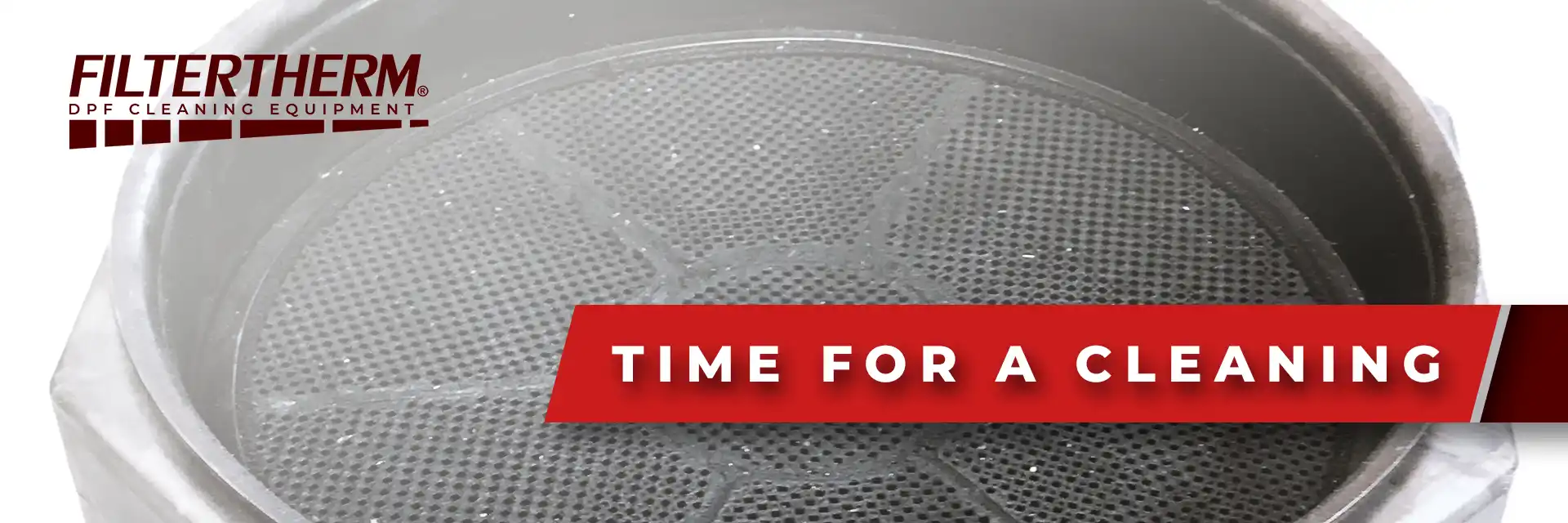
The problem is that oxidized ash/soot doesn’t disappear. The leftover ash contains inorganic materials and can’t be burned off through regen. Over time, this accumulates in the filter, restricting airflow, and no amount of regens will fix it. At that point, the DPF has to come off the truck and be cleaned — or replaced, if it’s been neglected.
For additional resources on how often that cleaning should happen and what drives the interval, see How Often to Clean a DPF? For a full breakdown of DPF cleaning costs — outsourced vs. in-house — see the DPF Cleaning Costs Guide.
The 3-Stage Thermal Cleaning Process
The Thermal DPF Cleaning Process is organized into three main stages: Pre-Clean, Clean, and Post-Clean. Every step within each stage serves a purpose — and the ones that sometimes get skipped are usually the ones you’d most want done.
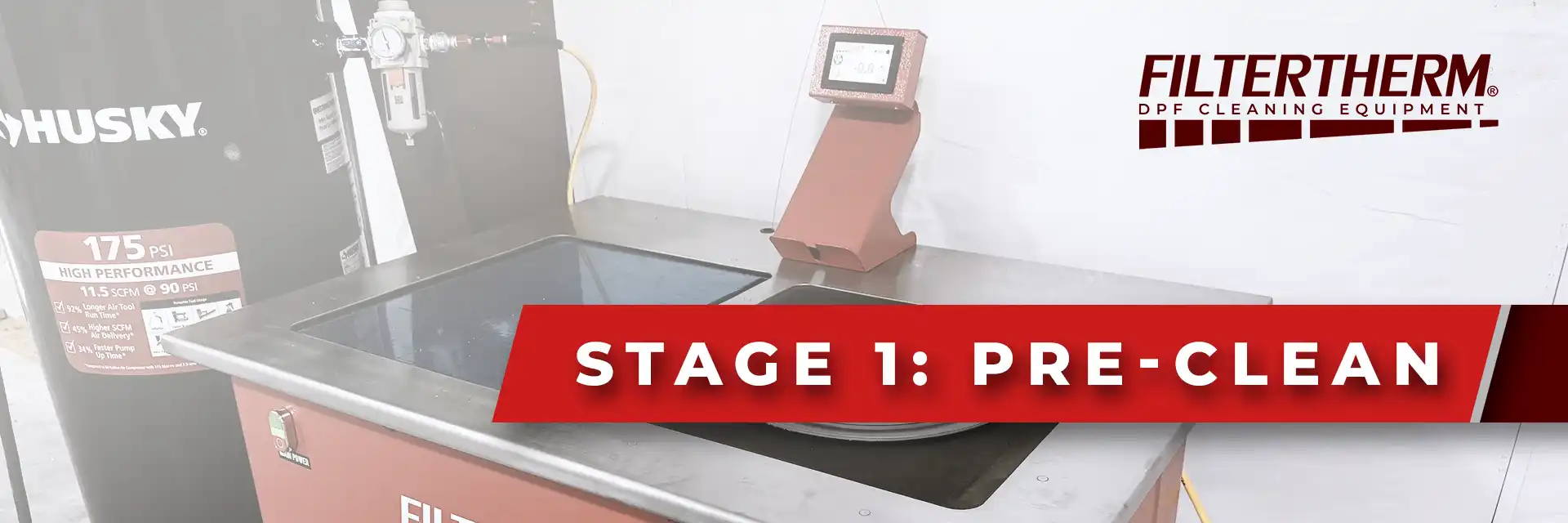
STAGE 1: PRE-CLEAN
Step 1: Inspect and Benchmark
Before anything else, a proper cleaning starts with a thorough inspection. Visual inspection comes first — a trained tech is looking for physical damage: cracks, broken substrate, evidence of upstream issues like oil contamination or coolant intrusion. If a filter is compromised or cracked, cleaning it is a waste of time and money. If it’s oil-soaked, putting it in an oven without addressing that first can cause a fire.
After visual, a pin or wire test checks for hard-packed cells — cells where ash has bonded to the cell wall and blocked the opening entirely. Often, this hard packing occurs in the middle portion of the filter brick.
Then comes benchmarking: measuring the filter’s current (pre-clean) airflow (flow test) and recording its weight.
For a deeper dive into inspection and benchmarking techniques, this Filtertherm guide covers it in detail. You can also watch the process in action on the Filtertherm thermal DPF cleaning video series.
Step 2: Document Everything
Once inspection is complete, everything gets recorded — pre-clean weight, flow readings, photos, and any damage or anomalies noted. This creates the baseline that makes post-clean results meaningful.
Shops that skip documentation either don’t have a good system or don’t want a paper trail. For fleet managers, before-and-after reporting is the minimum standard worth holding any DPF cleaning service to. Filtertherm’s FilterTrak software builds this documentation into the cleaning process automatically — every filter, every service, tracked in one place.
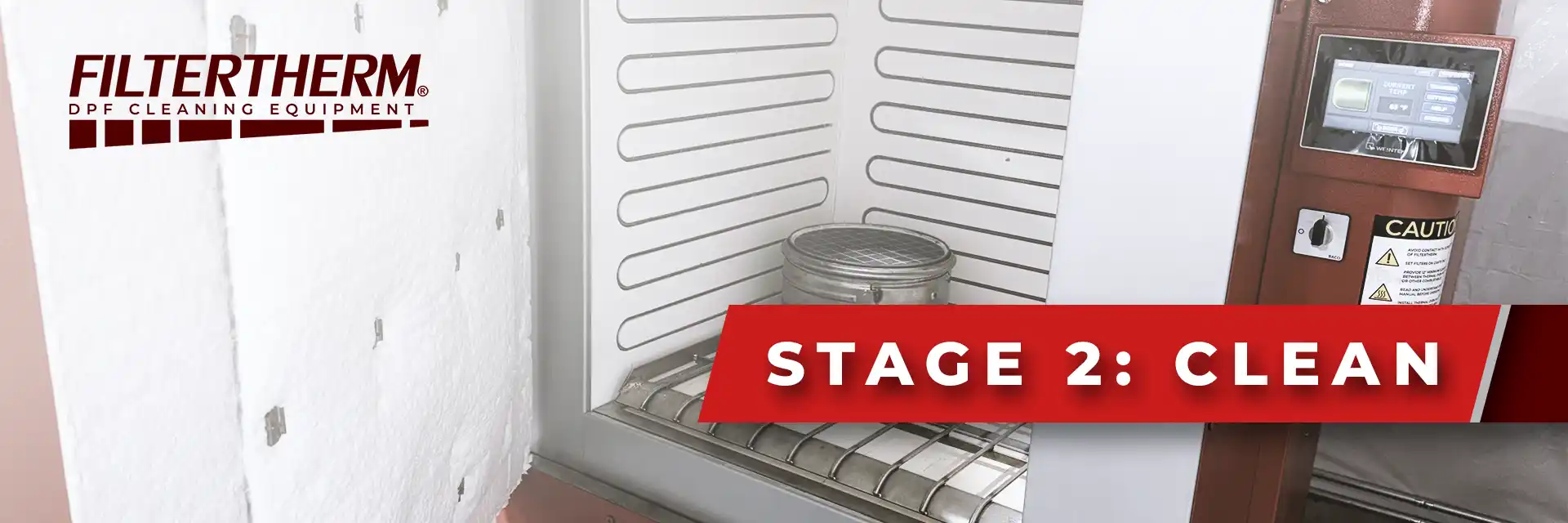
STAGE 2: CLEAN
Step 3: First De-Ash Pass
The first cleaning step: removing as much loose material as possible before any heat is applied. The most effective tool is a pulse cleaner — an automated system that uses air pressure and releases it in controlled bursts across the face of the filter, dislodging loose soot and ash into a sealed collection chamber. A single pass typically takes around 20 minutes.
This first de-ash pass removes the loose material. But here’s where some operations stop — calling the filter clean and sending it back. For lightly loaded filters with good flow readings, that may be technically adequate. For anything else, it’s not a complete cleaning. The bake step is what actually addresses the ash that’s often packed into or bonded to the substrate.
Have you ever wondered if liquid DPF cleaners are a viable option? Check out: Do Liquid DPF Cleaners Work?.
Step 4: Bake the Filter
The filter then goes into a DPF oven — purpose-built equipment that heats the filter through a precisely controlled temperature profile. The goal: reach temperatures high enough to oxidize remaining soot into ash and loosen bonded ash from cell walls, without damaging the filter substrate.
The two most common DPF substrate materials are Cordierite (the tan brick, handles up to ~1,200°F) and Silicon Carbide (the blue checkered brick, up to ~1,400°F). A properly configured oven — such as those in the Filtertherm Thermal system — lets the technician select the correct material profile. Thermal shock from incorrect temperature ramp rates can crack a filter.
The baking cycle typically runs overnight — most operations load a batch of filters at the end of the day and have them ready the next day. This is one of thermal cleaning’s practical advantages: the oven does the work while the shop is closed, and multiple filters can be baked simultaneously.
Worth noting: every filter, without exception, deposits additional ash during the bake. The heat loosens material the first pulse pass couldn’t reach. That’s exactly the point — and it’s why the second de-ash step is not optional.
Step 5: Controlled Cool-Down
Once the baking cycle completes, filters need to come down in temperature safely before they can be handled or pulsed again. Most operations crack the oven door once the internal temperature reaches a safe threshold, then transfer filters to a cooling cart — equipment that helps bring a filter to ambient temperature sooner, lowering the risk of thermal shock.
Step 6: Second De-Ash Pass
The second pulse pass — the second “Pulse” in Pulse-Bake-Pulse — and it’s essential. The bake always releases more material, and that material needs to come out.
Pay attention to the color of the ash: white or light grey indicates a thorough clean. Black ash means unoxidized soot is still present — the right call is to run a flow test and, if readings aren’t where they should be, bake the filter again.
Skipping the second pulse pass means loosened ash stays in the filter. That’s not a complete cleaning — it’s just a “half-baked” one.
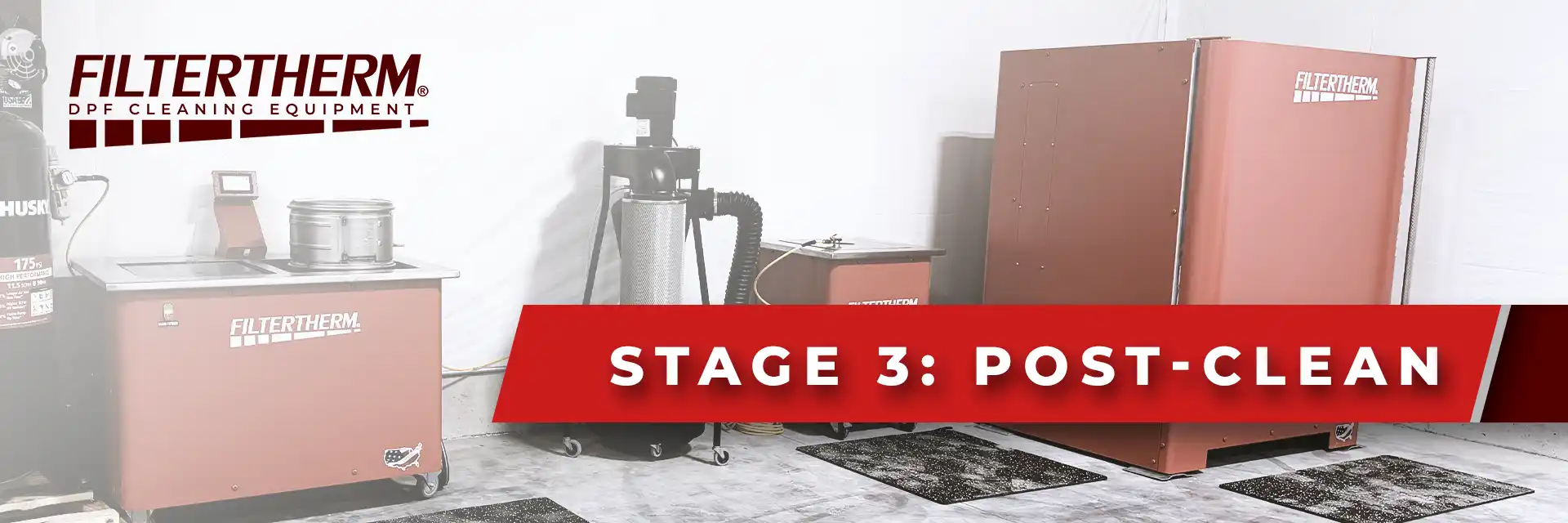
STAGE 3: POST-CLEAN
Step 7: Post-Clean Inspection
With the cleaning complete, the same inspection steps from Stage 1 are repeated: pin test, flow test, and weight measurement. Compare post-clean airflow against the pre-clean baseline and against published flow specs for that filter. If the numbers haven’t moved enough, the filter may need another bake, or it may have hard-pack damage that cleaning can’t fully resolve.
For a deeper look at how to interpret post-clean verification data, see DPF Cleaning: Verify Your Filters.
Step 8: Document and Report
Post-clean results get recorded alongside the pre-clean data: final weight, final flow reading, after photos, and any relevant notes. This creates a complete service record for that filter.
Fleet managers who receive these reports consistently find them useful beyond confirming a cleaning happened — tracking filter performance across multiple service intervals reveals patterns, flags persistent upstream issues, and identifies when a filter is approaching the end of service life. That kind of data turns reactive maintenance into proactive diesel particulate filter maintenance. Filtertherm’s FilterTrak software makes this documentation automatic and accessible from anywhere.
Step 9: Return and Reinstall
Lastly, the filter goes back onto the truck. Reinstall, clear any fault codes, verify normal operation, and get that truck back to work. Measured in, measured out, documented at both ends.
🛠️ Should You Clean In-House or Outsource?
In-house cleaning can be cost-effective for large fleets (with a DPF cleaning system), but it requires equipment, training, & space.
Outsourcing is better for smaller fleets or companies without a dedicated shop. Many providers offer pickup/drop-off services with minimal disruption.
Run the Numbers. Run your fleet’s numbers with our fleet-optimized DPF Cleaning ROI Tool. >>
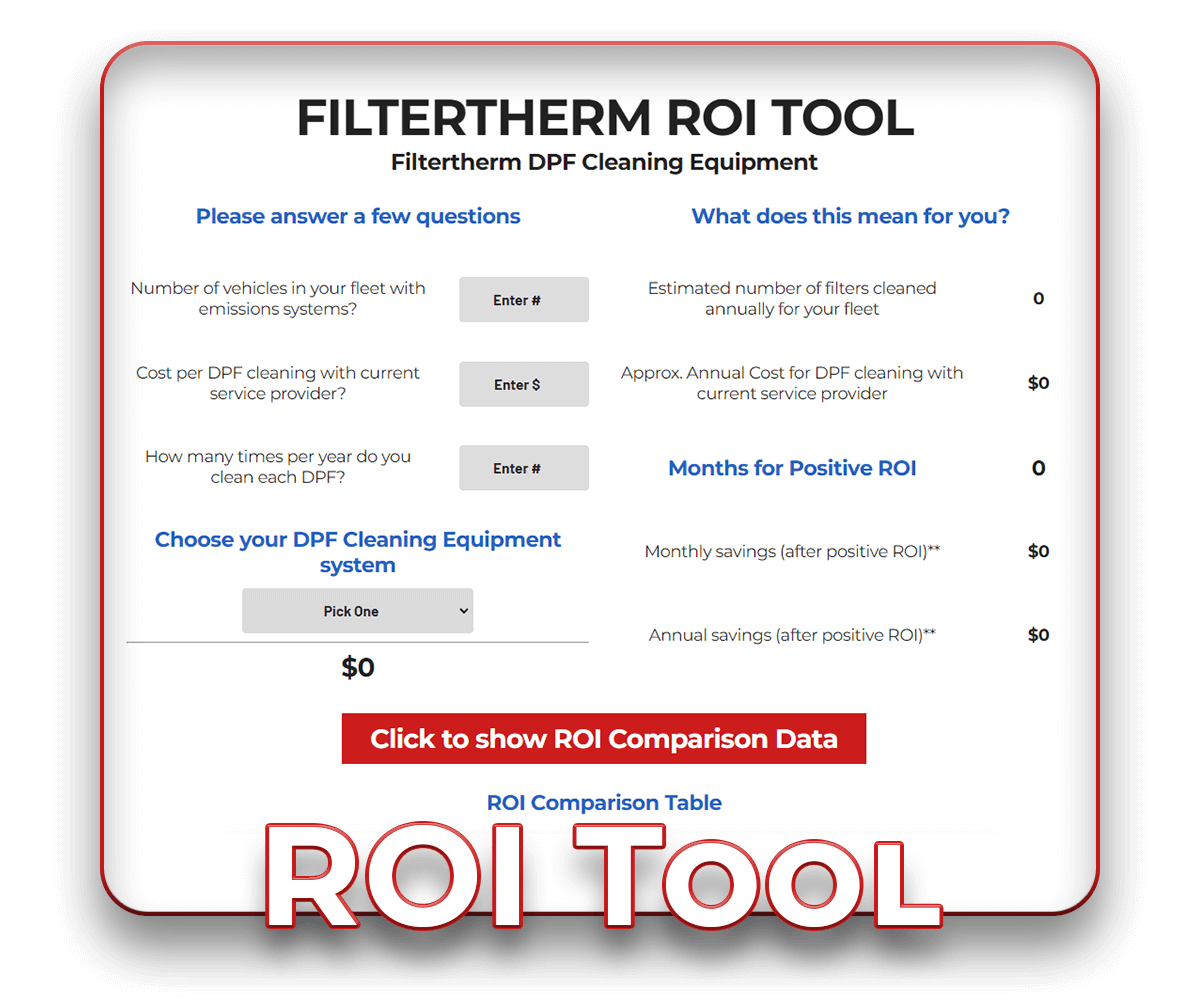

Get the Premier DPF Cleaning solution for your FLEET.
Give us a call. Get Answers.
Use our ROI tool to see how quickly this investment can save your fleet time and money. Financing is now available. Check it out!
Call or email to schedule a meeting with our expert Sales Team. Nadjara would be happy to help you.